Art by Milo
Therapy is a complex mix of experience, process and learning. Different therapeutic approaches highlight different aspects of this complex, but the relationship between you and your therapist is one element that is always playing a part.
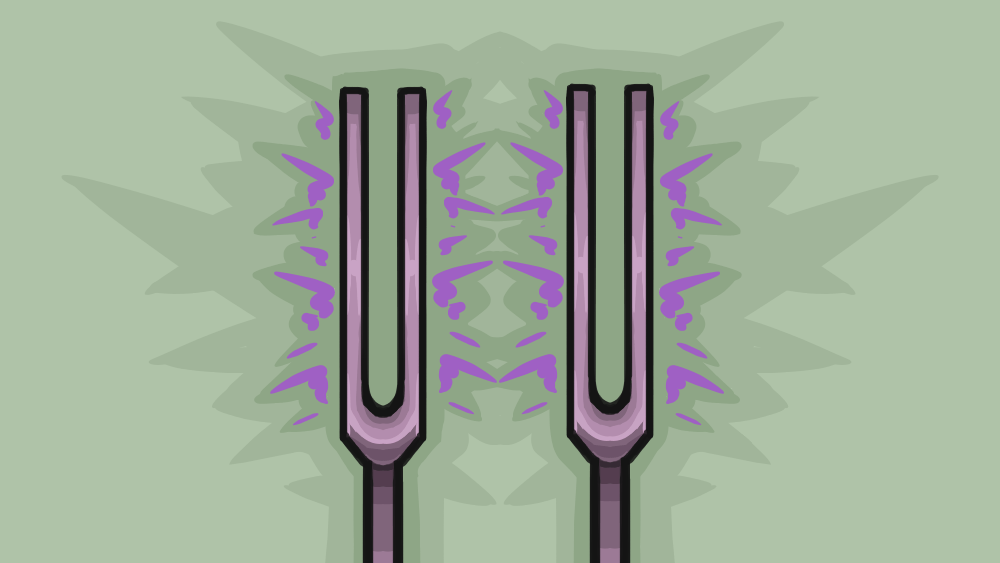
One of the more subtle aspects of this relationship is called co-regulation. It’s like when two tuning forks begin to vibrate together when one is struck, or, as in this video, how metronomes synchronise:
When we are little, we can’t self-regulate. This is something that our nervous systems learn from our caregivers. Ideally, when we got overwhelmed or overstimulated, our carer would sooth us and we learned to calm ourselves by being near someone who is staying calm.
This happens through mirror neurones. These are neurones that fire both when we do something or watch others do it. Its like our nervous system reflecting it back someone else’s. Our brains don’t really know the difference between these firings, so watching is almost as good as doing in terms of wiring the brain.

This appears to play a part in learning new skills and in developing empathy. In a simplistic way, empathy is the ability to experience someone else’s emotions. This allows us to deepen our connections to others by letting us feel how they experience the world.
Sometimes a parent is not able to self-regulate so we don’t learn how to ourselves. In some cases, the caregiver escalates the emotion when we feel it when they get angry or scared or anxious when we cry out as babies. When this happens, we learn to shut down in the face of strong emotions to protect ourselves. In the case of traumatic experiences, the self-control network of our brain can short circuit and cease to function effectively.
When we experience these strong, unregulated emotions with our friends or family, they can begin to feel these emotions as well and begin to lose their own ability to regulate them. This can be the reason people often deflect these emotional conversations (fixing, making jokes, changing the subject) or avoid them altogether. This can be pretty overwhelming for both parties.
But it can work the other way around too. When we are in the presence of somebody who is naturally able or trained to self-regulate in highly charged emotional interactions and we trust them, they can help keep us in a regulated state. This mimics the natural and effective way we actually learn to regulate our emotions in healthy environments. By holding the line and not becoming overwhelmed, they provide an anchor that pulls our nervous system into co-regulation. Over time, we can internalise this process and begin to more effectively self-sooth and manage extreme emotions on our own.



 Cameron Adams Couselling